
Pleasure on the Edge of Fear: A Generation Drunk on Desire
When life fluctuated between euphoria, anguish, joy, and the bittersweet pains of growing up that only time would reveal

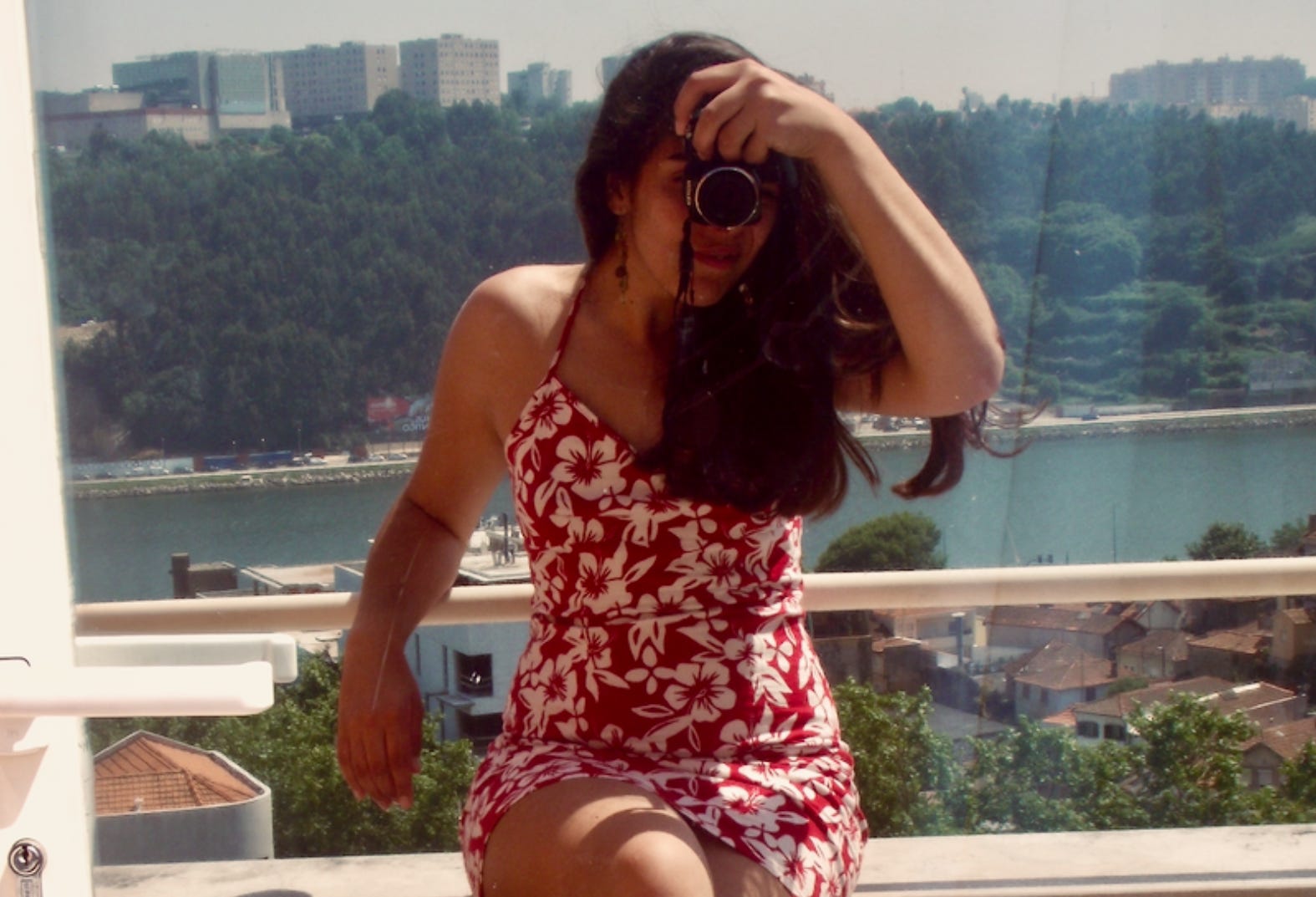
With the end of university and the consequent beginning of adult life, each member of the group of friends followed their own solitary path.
They were the same ones who, just a few months earlier, had sworn they would never lose sight of each other; those who promised, almost solemnly, to always stay in touch. They would no longer be our housemates, but the bond would remain until we died.
It was almost a blood oath.
Of course, none of that happened.
We realized it clearly when we slammed the door of the student residence for the last time, left, and there was no one there to say goodbye. From that point on, it could not even be said that we were each on our own.
The verb had ceased to be conjugated in the first person plural.
I was alone, and the others probably were too. It was like the end of The Breakfast Club1 or Dustin Hoffman’s expression of despair in The Graduate2 at the back of that bus, carrying a bride who was no longer quite his own. What were we going to do now after that youthful folly?
The future, that undefined thing, held an unequal fate for each of us.
Some were luckier, others less so. In fortune and misfortune, there was a bit of everything.
If someone was lucky at work and even in love, they would end up unlucky in health. If someone had health, they lacked it elsewhere. Some unfortunates seemed doomed to misfortune in every aspect of life. Yet, all of us, some on more winding paths than others, would eventually embody some stereotype or cliché we had sworn never to be.
As we learned from these growing pains, life was cyclical: we would ultimately become our parents. Our parents — the very ones we had so desperately wanted not to become. We had fought so hard to avoid falling into the same trap.
But, turn the page, and everything would be there: someone would become the alcoholic who never admitted it; another would turn into the divorced woman eager to seize life now; another, whose name we might even forget, the mother of several children who would give up her career (and she, who had sworn she hated motherhood).
Yet this last one would surely have a better fate than the one beaten by her partner and married for life.
Someone would also become the unlikely figure of infertility, with a happy marriage but incomplete due to that weight on both their lives. Of all destinies, after misfortune in work, love, and health — exactly in that order — I didn’t know that fate would assign me the inability to bear life at all.
When I see the 18-year-old girl afraid of getting pregnant almost just by breathing near a man, I want to laugh at her innocence, as well as at the time wasted in anguish over a pregnancy that could never have happened.
But before all that, before we knew the weight of each fate, there was still a time when we believed we could choose our path. We did not believe anything was destined for us. It was up to us, and only us, to tread it, as if we alone had the power to govern our lives. The world around us seemed to have no impact on what the future held. We had everything in our hands!
Reality, however, was about to show us something different.
We left university to be absorbed by a world with the highest unemployment rate of our democracy.
The days were as bitter as they were gray.
That winter of 2011 also brought unusual cold, mixed with incessant rain that made Porto the gloomy city all the stereotypes spoke of. To make the scene worse, dilapidated buildings piled up.
These, soaked with dampness, with walls touched by grime and collapsed ceilings, housed the countless homeless that Pedro Abrunhosa3 sang about in Quem Me Leva os Meus Fantasmas.
Some faces shown in the video clip were familiar to me, others refused to appear. With modern sensitivities, I believe the privacy of those humans could spark objections. But no one expressed outrage.
After all, there were bigger issues to worry about. Safety was one of them, too.
Walking around Porto was as unpleasant as it was dangerous. If we were not confronted with the sight of the homeless, we faced the threat of a knife pressed against our stomach by some drunk with AIDS trying to steal the coins we didn’t even have in our wallets. That is, of course, if they didn’t take the wallet first!
Both situations were real. The knife happened to me, the wallet, and the next day, to one of my best friends. Although abnormal, everything seemed part of life, fear included.
Damn, and AIDS!
Kids today don’t seem to understand the real fear we had of contracting HIV. I think not even the COVID period compares to that fear.
A single kiss could go from bad to worse. Death could have been our diploma. The HIV testing van was a constant reminder of our — my — foolishness.
It became a real monster we had to confront while drunkenly wandering the city center. Everyone, without exception, looked at the vehicle in fear, unable to utter a word about the anxiety overwhelming our minds.
And, of course, when I learned a close friend of mine had the virus, the abstract fear became real.
Too real.
The virus seemed to be inside me as well. And although it was not in my blood, it was always in my thoughts. The fear never left my nerves. I never stopped hugging him, but I indeed began doing it with several worms gnawing at my mind.
“What if he has an open wound? What if I accidentally touch his blood? Or his saliva? Or the air he breathes? Can you catch HIV just by him looking at me?” A thousand other questions raced through my mind. I didn’t want to think about them. I didn’t want to be that fearfully illogical person.
I knew perfectly well how everything worked, but it had been so easy to be open-minded before.
Before, when everything only happened on paper and not beside us, in the handsome friend we almost dated, only to later learn what hid behind that immense, beautiful smile.
Beyond the crisis that had settled in our world throughout the university, we still had to live with the image of a virus that seemed intent on killing either the sexual scoundrels or blaming those who got carried away by them.
Both were guilty. The scoundrels and the victims. All without exception were constantly reckless, as youth dictates. We knew it well, and so excused ourselves for our young age.
But then, at each blood test, we opened the results envelope with trembling hands. We read the results multiple times to make sure we were safe.
The tension was such that we could no longer tell if negative was negative, if positive was truly positive. We read the numbers, the arrows, the charts.
Eventually, we breathed a sigh of relief. But that wouldn’t be the last test, at least as long as youth lasted.
My friend, who once thought he would quickly leave this life, is aging as healthily as possible. But unlike the generation before me, I am wonderfully lucky to say: he is still here!
Almost twenty years later, he is still here!
Growing old, though painful, has the benefit that for most of us that fear has become a thing of the past. At least, that’s how we feel now, until life haunts us again with new, as yet unknown, chapters.
Life allowed us a swap of positions. We finally stopped being the supposed victims! On the other hand, we lived to see close friends turn into current scoundrels. It fits with what they call middle age and the sense of unfulfilled life haunting forty-year-olds.
At the time, most of them were also much older than us.
Many of us, especially the girls, saw them as charming, confident, irresistible, and above all, the main ingredient, mysterious.
The parallel-life game they didn’t reveal left us excitedly enchanted. Single or married, they dazzled us far more than the kids our age, who felt like younger brothers to us.
Of course, they knew it well.
They had lived long enough to understand the natural allure of a twenty-year-old woman to an older man. They didn’t even need to watch as many French films as I did to know it. They carried a schooling we could never have at such a tender age. It was an unfair competition.
The truth is that when I reached the age they had then, looking back filled me with tremendous disgust. At the end of my twenties, I couldn’t fathom how a twenty-eight-year-old man could have any interest at all in me at a mere eighteen.
At thirty, I would never want to sleep with someone so young. It was almost pedophilia.
Quickly, that charming man of our youthful rebellion easily became a miserable coward. The charm disappeared in drag. He had become a complete jerk. A half-man who could never conquer a woman his age and was left turning to inexperienced girls.
As life went on, what fascination could we have at thirty for a man who had misled us by liking Nirvana, Massive Attack? A man who made us fall in love with Moby or Zero 7? What would it matter?
But the music, damn it! The blasted music! Rock, punk, grunge! Even reggae!
Musical taste seemed to be the main trait that made us like someone! We tried to play with the same cards. With excessive effort, we intentionally brought up which bands we liked in conversation, hoping to capture in him the same illusion they captured in us.
We filled our rooms with posters and tried to show who we were through our CDs, movies, and clothes. All to become genuinely interesting. We imagined they would be the same and like all of it. And at some point, we didn’t know if we liked him because of the music or liked the music because of him.
“We are each other’s Destiny,” sang Zero7. And we wanted to believe they sang about us. That it was our story. That the hugs and kisses given were brushed with the same cheerfully melodic tones of Nouvelle Vague4.
With them, we walked the avenues with an MP3 player with half a dozen songs, cheap earphones from the Chinese market, and horrible sound, which didn’t seem to matter.
Life, we believed, resembled a massive film shoot with “Ever Fallen in Love” by those French girls as the soundtrack.
“Ever fallen in love / In love with someone / You shouldn’t’ve fallen in love with,” sang the cute girls. Of course, that was for us too.
For whom else could those words be but to illustrate the story of a mysterious love we believed we were living?
And, of course, Koop’s “Island Blues” was the ultimate song to accompany us when drama struck. We went to Piolho5 to get drunk. To go out wasted with a friend who didn’t understand us.
Confused and restless, we crossed Porto’s night streets on the way home, either with hot tears falling on our cold faces followed by indecipherable laughter, or with a fury so strong that we fell into the arms of others to seek some fruitless revenge.
All this while, in suffering, we still hoped a mere message would make our phone vibrate; some notice telling us the night’s last stop wouldn’t be that bar but a stranger’s bed; on a floral or lace quilt made by the dear hands of someone’s mother.
There, we would lie with our bodies cooling down, somewhere in an apartment in the city we only knew in the dead of night, driven by a car with one hand on the wheel and the other on our legs. Accompanied, of course, by music at full blast that intoxicated us more than the alcohol ever did.
Nearly thirty, we finally realized they were beautiful songs, no doubt, but perhaps we had wanted to claim them as if they were only about us and for us. We as the main protagonists, not of our story, but of the whole world.
It was beautiful, yes — what romance story isn’t — but it had as much joy as torture.
As much joy and pleasure as there was suffering. We rejoiced in the arms that threw us onto a bed and pretended to love us as if the world would end the next hour. We mortified ourselves moments later.
The same body, now lonely, abandoned by the roadside, slowly dragging itself to immaculate, solitary sheets, gnawed by the anguish of imagining none of it would happen again. That we would fade into oblivion. Worse! That we would never again be desired.
Years later, from Ornatos’ Ouvi Dizer6, we could only squeeze the one truth and final phrase: “It was all a stupid song for you that only I heard!”
It took me at least ten years to understand what that meant.
But, of course, at the time, we could never have that kind of knowledge
that comes only with aging. Back then, sex was much more than physical pleasure; more than the exchange of two bodies or the pursuit of a desire we had never truly felt.
It represented a line of prohibition we had dreamed of for years without daring to cross. It was feeling, along our spine, the fear of everything we risked between a developing body and a foggy mind trying to enter the adult world without any script to do so.
All carried out at a chaotic age, where feelings were painted in bright, incandescent colors, whether phosphorescent or suddenly turned to melodramatically melancholic tones.
The pleasure we sought was greater than the pain of regret that haunted us in the following days and weeks.
We never learned.
There was always the body that defeated us. It was a battle lost from the start.
We always repeated the cycle.
We were good students in classrooms, but terrible at deciphering the real codes of human interactions.
Especially, of course, the sexual ones.
“I’m under your curse now / But I call it compromise / I thought that you were wise / But you were otherwise,” sang Morcheeba7. No matter how many lyrics passed through our ears, no one taught us to decipher their meanings. Only life would.
With all that occupying our minds, it’s no wonder that few of us could remember what was taught in law classes or difficult international economics lectures.
Intercultural communication? We wouldn’t even know! How could we when we didn’t even know communication while lying next to another naked body!
We didn’t even know how we managed to pass each of those courses! Some things seemed completely wiped from the brain. Possibly, we were in class, but our thoughts about the previous night were too strong to be simply ignored.
We floated between the desire to repeat it and the horrible fear of getting pregnant or catching The Disease. The mind busied itself trying to understand what we had really done. There was no maximum concentration for the material, only the possible.
Only enough to “pass the course.”
The rest seemed utterly irrelevant.
Hi.
If you enjoyed what you read and think my work deserves support, consider “buying me a coffee.” Your contribution helps me continue creating and investing in my work.

Thank you so much.
Notes:
The Breakfast Club (1985) — a film about a group of high school students from different backgrounds bonding during detention.
The Graduate (1967) — Dustin Hoffman as Benjamin Braddock, uncertain about the future and relationships.
Pedro Abrunhosa — Portuguese musician, Quem Me Leva os Meus Fantasmas is a song referencing societal struggles.
Nouvelle Vague — French band known for covers of 60s songs with a melancholic, jazzy style.
Piolho — a famous bar/club in Porto.
Ornatos Violeta, Ouvi Dizer — Portuguese rock band and song, reflecting unrequited love.
Morcheeba — British band mixing trip-hop, blues, and pop.